Authenticity checked by phone
Just tap: the chip confirms that the certificate belongs to exactly this work.

The Tokentag is a small NFC chip you stick on. It links your work to a copy-protected certificate on the blockchain – anyone can check it with a smartphone, no app to install.

Explainer video with narration: how your work becomes a verified original.
Four steps to your digital certificate of authenticity.
Stick the Tokentag to your work – for example on the back of the frame.
Hold your smartphone to the Tokentag. The web app opens automatically in the browser. Connect your Ethereum wallet – with a little ETH for the network fee.
Title, description, photos. Optional: have a 3D model calculated from photos or upload your own.
One click creates the certificate on the blockchain. From now on anyone can check authenticity with a tap.
In step three you can add media to your certificate:
Calculate from photos or upload your own model
Details, back, signature
Creation or making-of
Want to know every detail? Here is our Documentation
Easy to use, hard to fake – this is how the Tokentag protects your work.
Just tap: the chip confirms that the certificate belongs to exactly this work.
The certificate lives on Ethereum – publicly traceable and independent of Tokentagged.
The web app opens automatically in the browser when you tap – on iPhone and Android.
Anyone with an NFC smartphone can check the certificate – anywhere, any time.
The key is created inside the security chip and cannot be read out – a copied print does not help forgers.
To protect art, collectibles and valuables – without a paper certificate.
Many NFC authenticity solutions verify using a key on the provider’s server. The Tokentag takes a different route – the four key points in brief.
When tapped, the Tokentag proves it is genuine with a signature made inside the chip.
The secret key is created in the security chip and never leaves it. A photo, a serial number or a copied print can be imitated – this signature needs the chip.
Verification does not depend on a secret key on our servers.
Your browser gives the chip a fresh challenge, the chip signs it, and the browser checks the result against the address in the certificate – mathematically, without asking us.
Certificate, media and verification need no data from our servers.
The certificate is a token on Ethereum; images and description are stored on Arweave – both remain in place and viewable even if tokentagged.com should one day no longer exist. tokentagged.com merely provides the web app; any other app could perform the same check.
The chip signs using the same method as Ethereum wallets.
That is why smart contracts can verify its signature directly – for example to record an authenticity check permanently on the blockchain.
All statements refer to today’s Tokentag technology; the details are in the datasheet at the end of the page.
Artists, collectors and dealers of valuables – three things the Tokentag does for each of you.
Your work gets a digital certificate of authenticity that anyone can check.
Check authenticity and provenance by phone – one tap is enough.
Prove the provenance and authenticity of your valuables – from jewellery to collector's editions.
In depth: what the Tokentag does for artists and collectors in detail.
The Tokentag is your digital certificate of authenticity – copy-protected, with a share of resales and access to digital marketplaces.
Your certificate offers more than just text: Add 3D models (calculated from photos or uploaded yourself), videos and images to tell the full story behind every work.
Discover remarkable artworks – each certified and protected by a Tokentag.
by AKIRA
Oil and egg tempera on canvas, 91 × 152.5 cm
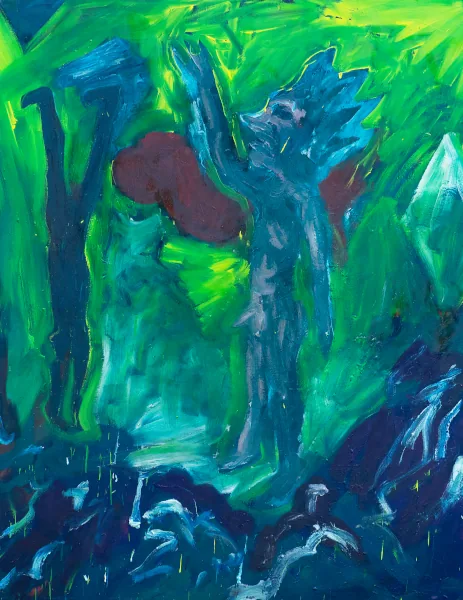 Certified
by AKIRA
Oil and egg tempera on canvas, 171.5 × 165.5 cm
 Certified
by AKIRA
Oil and egg tempera on canvas, 54 × 112.5 cm
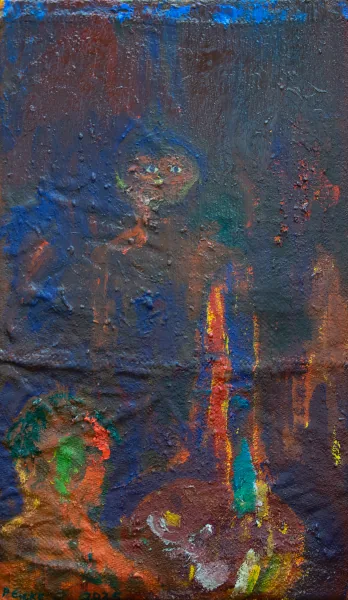 Certified
by AKIRA
Oil and egg tempera on canvas, 71 × 121 cm
by AKIRA
Oil and egg tempera on canvas, 133.5 × 246.5 cm
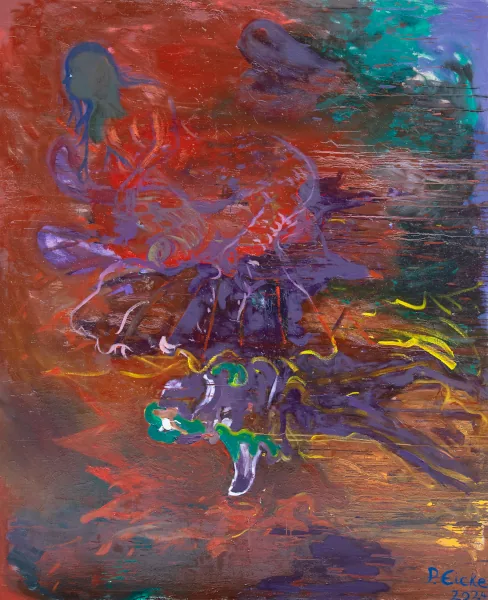 Certified
by AKIRA
Oil and egg tempera on canvas, 180.5 × 220 cm
No big words – verifiable facts.
NXP JCOP 4 with Common Criteria certification EAL 6+ – the same chip class used in bank cards and ID documents.
Certificate NSCIB-CC-2300172 (Common Criteria Portal)The private key is generated inside the chip and never leaves it – we don't know it either.
Swap Cards and Tokentags work with Ethereum – the largest open network for tokens. Balances and certificates can be viewed with any common wallet and blockchain explorer.
Lueers Inventions GmbH, commercial register HRB 201787. Developed and shipped from Germany.
Secure your works with a digital certificate of authenticity on the blockchain.
The integrated cryptographic NFC chip securely stores your private key and never exposes it.
Benefit from automatic royalties, complete provenance tracking, and access to global digital marketplaces.
The certificate that actively creates value.
Get the 5-pack of round Tokentags (Ø 33 mm) – ideal for sticking onto smooth surfaces.
Stick it on, scan, certify – your digital certificate is live.
Grab the 5-pack of rectangular Tokentags (55 × 33 mm) – for screw or rivet mounting with extra grip thanks to adhesive.
Mount, scan, certify – true one-of-a-kind certified pieces emerge.
The most important questions about Tokentags – everything else in the FAQ.
Yes. Swap Cards and Tokentags work with NFC-capable iPhones and Android smartphones directly in the browser – no app to install, the web app opens automatically in the browser when you tap. To read, hold the card or tag to your phone; the matching page on tokentagged.com opens. For verifying, handing over and sending, the browser talks to the chip: on Android via Chrome, on the iPhone via Safari or Chrome. Desktop PCs have no NFC function; there you can only view certificates and balances.
An NFC-capable smartphone (iPhone or Android) with internet access – no app to install: the web app opens automatically in the browser when you tap and shows the associated digital certificate on tokentagged.com. To verify the signature or create a certificate you also connect your own Ethereum wallet holding a little ETH for the network fee; the chip communication runs through Chrome on Android and through Safari or Chrome on the iPhone.
A Tokentag should be attached so that it cannot easily be removed – on the back of a painting, for example, or with screw or rivet mounting on other objects. The chip confirms its own authenticity and its link to the certificate; the firm attachment, the photos and details stored in the certificate and the documented chain of ownership establish that chip and object belong together. If the chip is damaged it cannot be repaired and its key cannot be recovered. The certificate on the blockchain remains, but it can no longer be verified with that chip.
The certificate does not live on our servers but as a token on the Ethereum blockchain. Images and descriptive data are additionally stored on Arweave when the certificate is created – a decentralised network for permanent storage. Both remain in place independently of Tokentagged and can be viewed with common wallets and blockchain explorers. Checking a Tokentag does not need any data from our servers either – everything required is public: the chip’s signature, the certificate on Ethereum and the manufacturer attestation. The Swap Card’s key is generated in the chip and never leaves it – the card remains a standalone Ethereum wallet even without our website. tokentagged.com merely provides the web app; any other app could perform the same check. An offline version of the web app, also to be stored on Arweave, is in progress.
Yes. Besides calculating a model from photos, you can upload a finished 3D model – as a mesh (glb, gltf, obj, fbx, stl, ply or zip with textures) or as a Gaussian splat (ply, spz, splat, glb), up to 200 MB. After the upload we prepare the model automatically (size, orientation, preview and trailer); it then appears in the certificate and in the media slider just like a calculated model. All you need is a Tokentagged account, and you confirm that you own the rights to the model; no 3D voucher is needed and the upload is currently free of charge. In your project choose “New 3D model” → “Upload your own 3D model”.
The security of the Tokentags relies on security chips that have proven themselves in bank cards and authentication systems. The secret key is generated inside the Tokentag, stored only there and never leaves it – not even we as the manufacturer know it. Cloning a Tokentag would mean extracting this key from the chip, which is exactly what the chip is built to prevent (Common Criteria EAL 6+). A copied print or a written-down number therefore does not help forgers. The check happens right in the browser: it gives the chip a fresh challenge, the chip signs it, and the browser compares the result with the address in the certificate – no central key on a server.
No need to read this – for everyone who wants to know exactly how the Tokentag works.
| Chip & certification | Secure element NXP SmartMX3 P71 with JCOP 4 (Java Card); platform certified to Common Criteria EAL 6+. The same chip as in the Swap Card. |
|---|---|
| Curve & signature scheme | ECDSA on secp256k1 – the same curve and signature format (r, s, v) as Ethereum. The challenge is hashed with the Ethereum prefix (EIP-191). |
| Key generation | The key pair is created inside the chip; programming only reads out the public key. The chip additionally stores two attestations (card, manufacturer) and returns them with every check. |
| Verification flow | Challenge-response in the browser: a fresh challenge (when signed in, bound to the current block hash) is signed by the chip; the browser recovers the address (ethers.js) and compares it with the address in the token ID – no server request. The attestations are checked against the manufacturer address. |
| Anchoring | Certificate = ERC-1155 token in the “Tokentagged” contract on Ethereum; the chip address is part of the token ID. The contract verifies chip signatures itself (ecrecover) – when minting and optionally as a verification record on the blockchain (verifyTokentag). |
| Media storage | Images and description data (token metadata) are stored on Arweave, a decentralised storage network, when the certificate is created – retrievable even without Tokentagged. |
| Independence | Certificate (Ethereum) and media (Arweave) live outside our servers. Verification needs no data from our servers – everything required is public: chip signature, certificate on Ethereum, manufacturer attestation. tokentagged.com merely provides the web app; any other app could perform the same check. An offline version of the web app, also to be stored on Arweave, is in progress. |
| NFC & browsers | Android: Chrome (Web NFC); iPhone: Safari or Chrome (WebAuthn). No app to install – the web app opens automatically via the NFC link. |
| 3D formats | Calculated from 20–200 photos or uploaded as your own model: glb, gltf, obj, fbx, stl, ply, zip; splats as ply, spz, splat – up to 200 MB. |
| Developed in Germany | Developed in and shipped from Germany (Lueers Inventions GmbH, Apelern). |
| Documentation | To the documentation |
One Tokentag, one tap – and your work has a certificate of authenticity anyone can check.
Key in the security chip
We help in person
With any NFC smartphone